
Duration
2024-2026
EU funding amount
1 634 872 Euro
Applicant
Museum of Applied Arts - Budapest (HU)
European partners
in total 13
CultHeRit
Young talent is leaving the CHIM sector (CHIM = Cultural Heritage Institutes and Museums) – whether to move into more lucrative industries or by migrating from East to West. At the same time, cultural institutions across Europe are facing vacancies for which it is becoming increasingly difficult to find applicants. Project-based employment, modest pay and a lack of career progression are making the sector increasingly unattractive – particularly for young professionals.
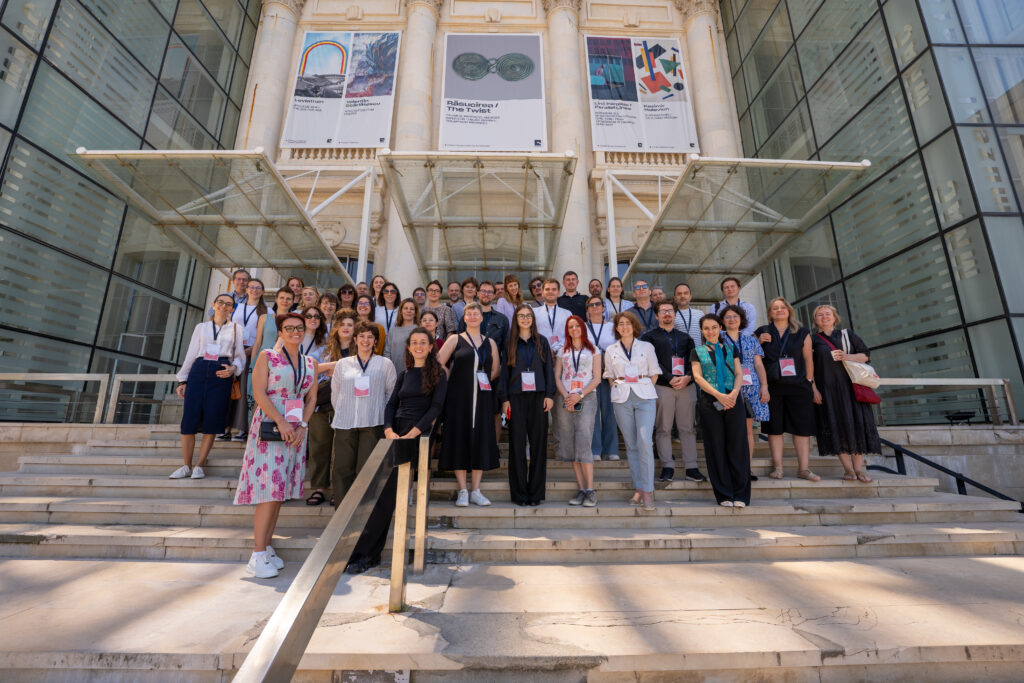
Genau hier setzt CultHeRit an: 13 Projektpartner aus acht Ländern der Donauregion haben sich zusammengeschlossen, um positive Veränderungen in den Beschäftigungspraktiken von Museen und Kulturerbe-Institutionen der Region anzustoßen. Aus Österreich sind das MAK – Museum für Angewandte Kunst und KUPF OÖ – Kulturplattform Oberösterreich in Linz beteiligt. Ziel ist es, den Sektor für junge Fachkräfte attraktiver zu gestalten, Abwanderung zu verlangsamen oder umzukehren und die Diversität der Belegschaft zu erhöhen.
As a first step, existing employment models in the cultural heritage sector were analysed through surveys of students, graduates, staff and managers.
A further step and a key component of the project was the recruitment of so-called ‘young professionals’, who worked within the institutions for a year and reflected on their experiences through feedback loops and an ongoing mentoring process. Regular mentoring sessions provided support both in settling into the institutional environment and in systematically reflecting on individual strengths and potential for development within the professional field.
The insights gained were consolidated into a transnational employment model that provides evidence-based recommendations for attractive, inclusive and sustainable employment practices in the CHIM sector of the Danube region. Furthermore, the project findings were compiled and documented in a three-volume publication.
In doing so, CultHeRit lays the foundation for long-term changes in employment structures within the CHIM sector and supports cultural heritage institutions in continuing to attract and retain qualified professionals in the future.
The project was funded by the Interreg Danube Programme.